
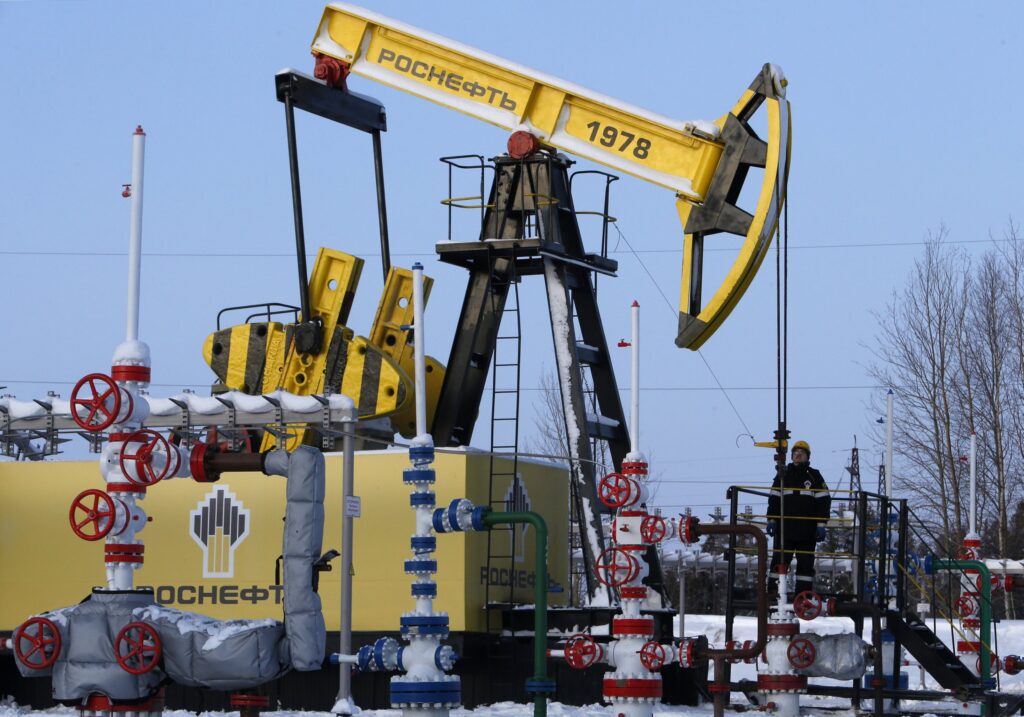
Rosneft (ticker: ROSN), Russia’s largest oil company, is currently trading on the Moscow Exchange (MOEX) at around 513-515 RUB per share. As of the latest sessions (March 20-23, 2026), the stock closed at 512.90 RUB on March 20 with a slight gain of +0.18%, and recent intraday levels have hovered near 513.35 RUB with minor upward movement (+0.09%). The daily range has been approximately 505-514 RUB, while the 52-week range stands between 362.60 RUB and 535.70 RUB. Over the past month, the share has shown strong momentum, rising more than 30% in some periods, reflecting positive market sentiment.
The primary driver behind this upward trend is the sharp rise in global oil prices, with Brent crude climbing above $113 per barrel (reaching levels like 113.33-113.52 USD/Bbl recently), up significantly due to geopolitical tensions, including concerns over the Strait of Hormuz and related risks in the Middle East. Higher oil prices directly benefit major producers like Rosneft, boosting revenues, profitability, and investor confidence. Trading volumes have also increased, indicating growing interest from investors amid expectations that sustained high oil prices could push the stock even higher, potentially toward 600 RUB if tensions persist.
However, the stock remains below some earlier highs from the year, with a year-to-date performance mixed and a 12-month change around -4% to -8% in certain reports. Fundamentals remain solid: Rosneft is a strategic state-controlled entity (with significant government ownership around 75%), has strong production capacity, and offers potential for high dividend payouts. Analyst views suggest average target prices in the 545-645 RUB range (though specific 2026 consensus is limited), implying 5-25% upside from current levels depending on oil market stability.
In summary, Rosneft shares are in a bullish short-term trend supported by elevated oil prices and geopolitical factors. It presents an attractive option for investors interested in the energy sector, but risks remain, including market volatility, broader Russian economic challenges, and potential sanctions impacts. Recent performance has been robust, with further gains possible if oil prices stay elevated.